
Buffalo Green Book AR Pilot: A Mobile Heritage Experience
Buffalo Green Book AR Pilot: A Mobile Heritage Experience
STORIES IN PLACE PRESENTS
Buffalo, New York
What if memory could temporarily overwrite reality?
Stories in Place explores how place-based storytelling and augmented reality can reconnect people with Buffalo's African American history—bringing historical research, archival material, and the stories of lost places back into the landscapes where they belong.
Why this history matters
History happened here.
The Negro Motorist Green Book, first published in 1936 by Victor Hugo Green, helped Black travelers identify businesses and accommodations during an era of racial segregation and discrimination.
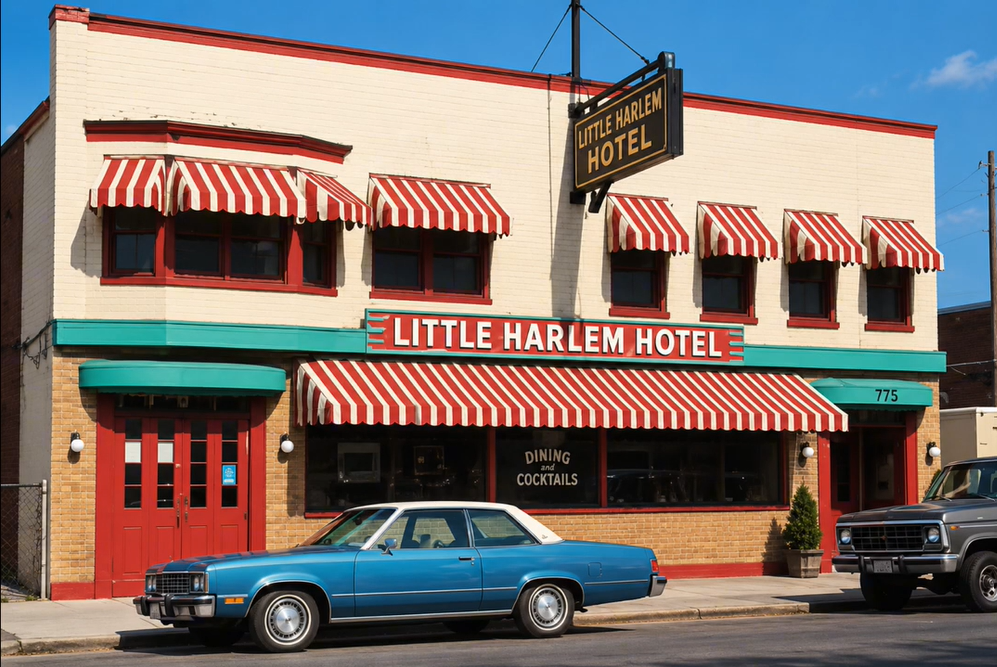
Buffalo was part of that history. The Little Harlem Hotel, at 494 Michigan Avenue, was listed in editions of the Green Book. It was also an important destination in Buffalo's Black entertainment history.
Many historically significant places no longer survive in their original form. When the buildings disappear, understanding their history increasingly depends on archival records, photographs, historical research, and the memories of people connected to them.
Design: Pair the text with an actual Green Book page, a verified historical photograph, or an image of the present-day site. Identify the source and date of archival material wherever known.
What the pilot is developing
Experience history where it happened.
The Buffalo Green Book AR Pilot is developing a mobile-based approach to historical storytelling that connects Buffalo's present-day streets with the history of the places that once stood there.
Through augmented reality, archival imagery, digital reconstructions, and narration, the project aims to help visitors engage with historical sites in their physical locations—not only through books, screens, or traditional museum displays.
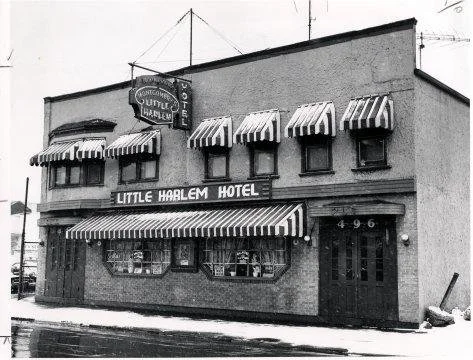
Research the place
Historical records, photographs, newspaper accounts, and other evidence inform the story.
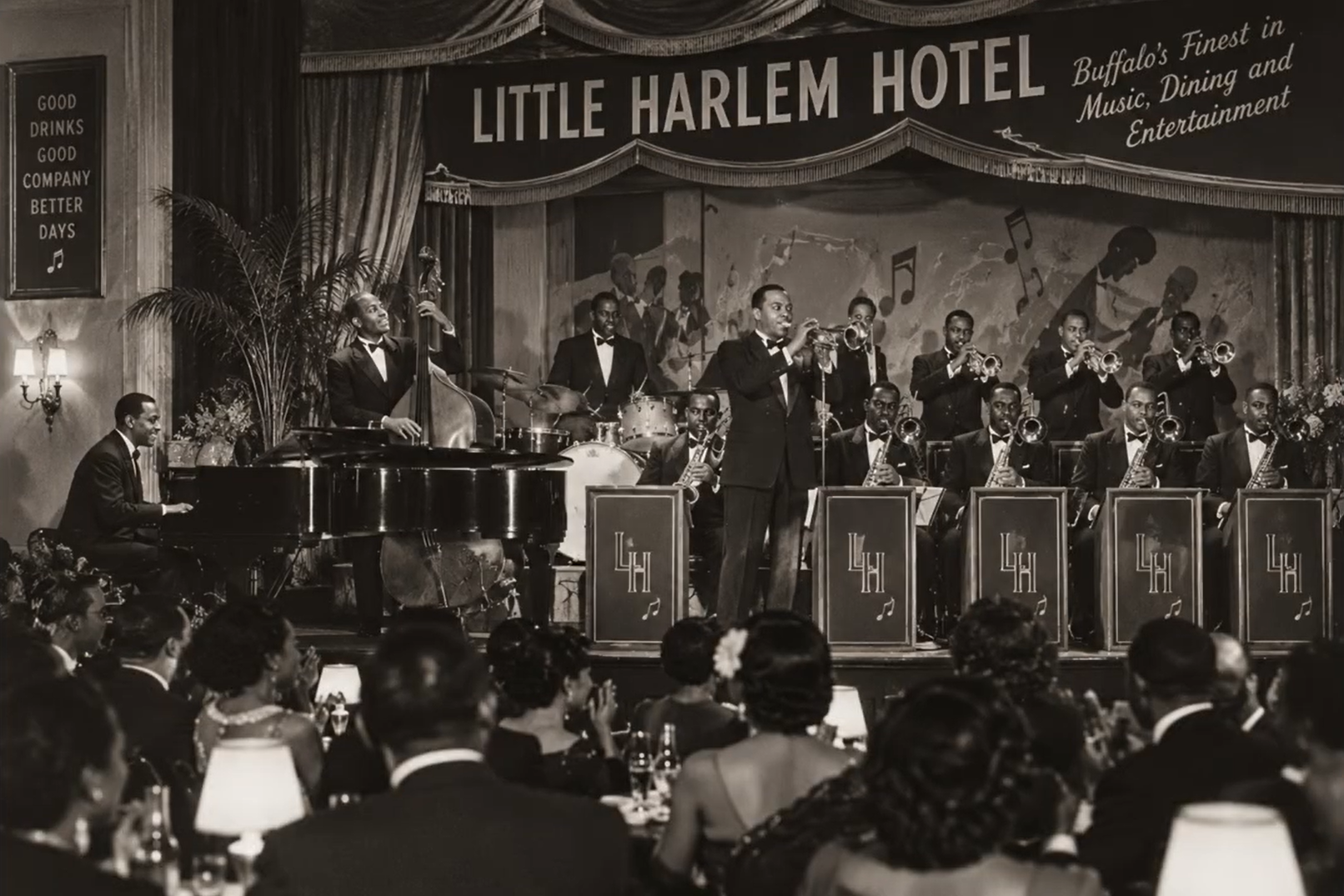
Reconstruct the experience
We use digital imagery and narrative design to rebuild lost historical spaces. Because these are creative visual interpretations grounded in research—rather than surviving photographs—we maintain absolute transparency about how the history is brought to life..
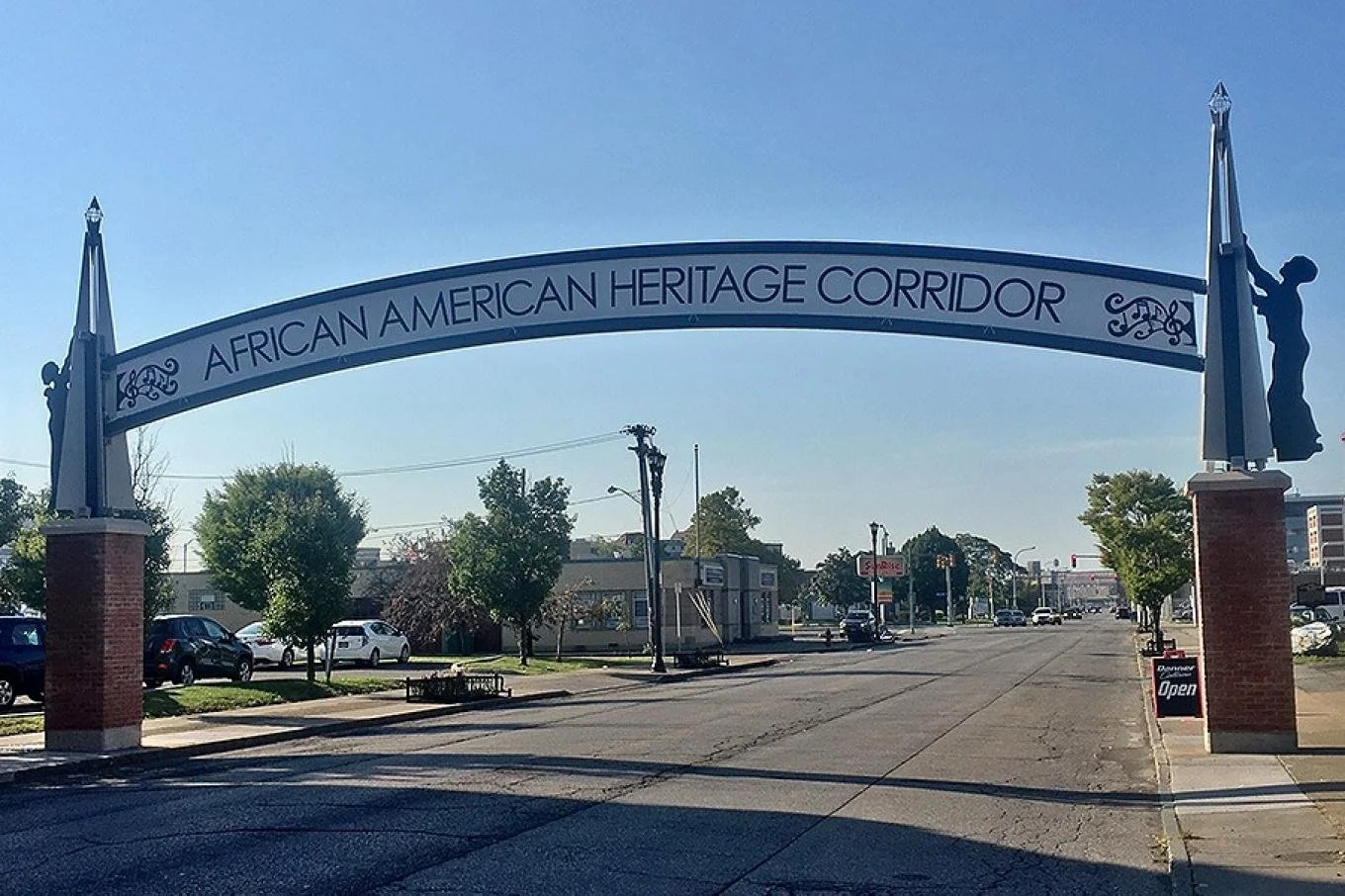
Reconnect history with place
The experience bridges the gap between past and present by tethering historical narratives directly to the physical street corners and neighborhoods where they originally unfolded, turning ordinary locations into immersive educational touchpoints.
Community participation
These stories belong in the historical record.
Photographs, family documents, newspaper clippings, business records, and personal memories can help deepen our understanding of Buffalo's African American history.
If you have materials or knowledge connected to Buffalo's Green Book era, Little Harlem Hotel, or related historical sites, I want to hear from you.
Help us uncover Buffalo's lost history.
Family photos, documents, clippings, and personal memories help us piece together the true story of Buffalo's Green Book era.
Got items or memories connected to the Little Harlem Hotel or other historic spots in the city? Share them to help support the Stories in Place project and bring these overlooked histories back into public view.
Stay connected to the story.
Follow the development of the Buffalo Green Book AR Pilot. Receive project updates, historical stories, behind-the-scenes glimpses of the reconstructions, and opportunities to participate in preserving Buffalo's African American history.
-
Stories in Place is a place-based storytelling initiative developed by Jalen A. Law. It explores how historical research, digital reconstruction, and mobile technology can reconnect people with African American history in the places where that history unfolded.
-
The Buffalo Green Book AR Pilot: A Mobile Heritage Experience is the initiative's first project. It focuses on Buffalo's African American history and the legacy of historically significant places, including the Little Harlem Hotel.
-
Jalen A. Law | The Jalen Law Collection LLC
Project originator and lead, responsible for the creative vision and overall development of Stories in Place and the Buffalo Green Book AR Pilot.
Sanaa.io
Technology and digital experience-development collaborator supporting the development of the project.
-
The pilot received support through a 2026 Statewide Community Regrant administered by Arts Services Inc. and funded by the New York State Council on the Arts.